
Chapter 3: Leadership
IN THIS LESSON
Leadership—The Captains of the Clubhouse
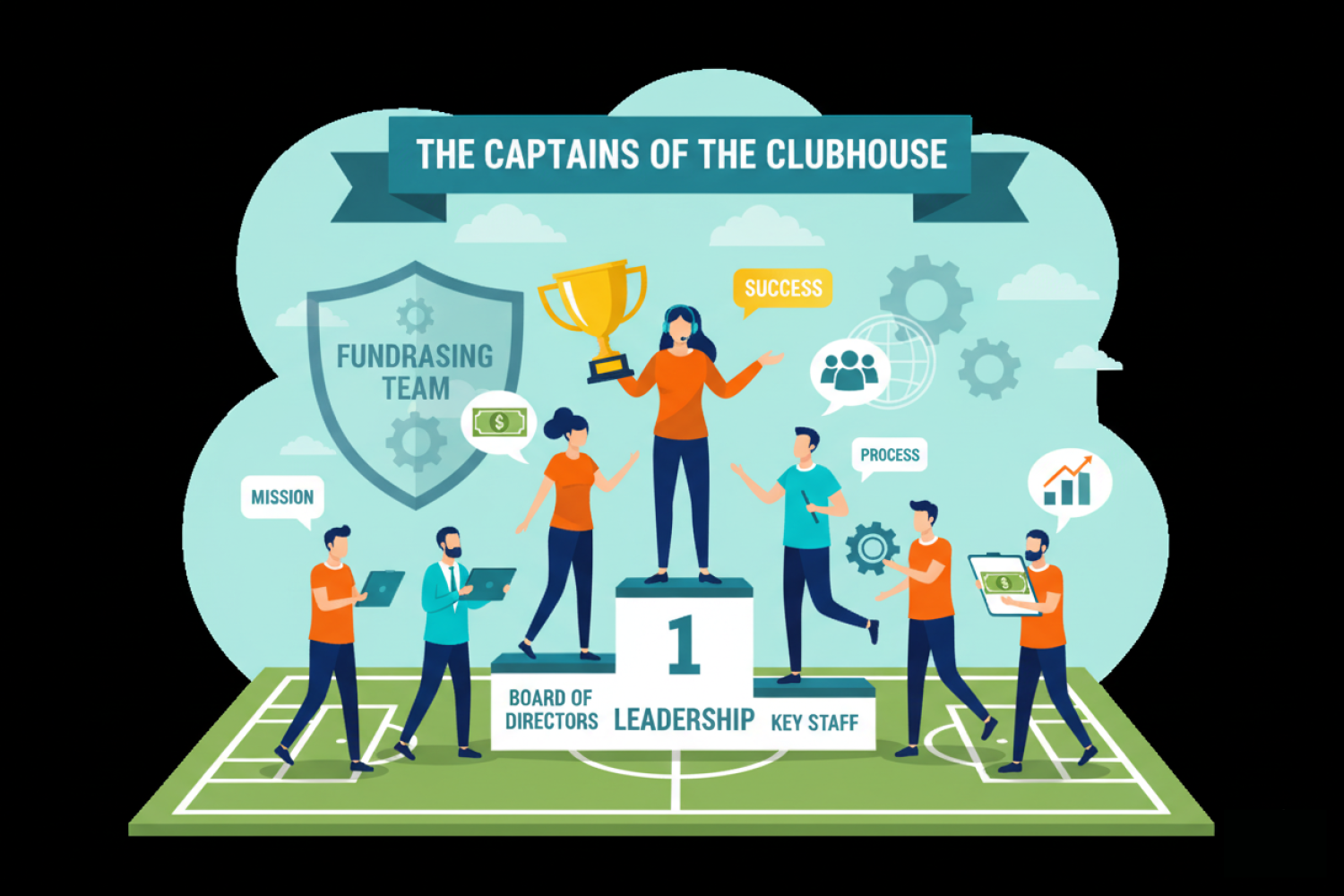
Every successful soccer team needs a great coach and strong captains on the field. Without a dedicated leader to set the vision and a committed team to execute the game plan, even the most talented players will fall short. In the world of fundraising, that leadership falls to your Board of Directors and key staff. Their commitment to the mission and dedication to the process are what drive success. Professional fundraising is a team sport, and leadership is the captain of your fundraising team.
Fundraising is a Team Sport
Historically, boards at both youth soccer clubs and community-based organizations have been largely made up of parents and community members whose primary focus was on programming, not fundraising. This has created a common misconception that fundraising is the sole responsibility of a single person. This couldn't be further from the truth. For a fundraising program to truly thrive, it requires a committed team of leaders who are all championing the mission.
This is a culture shift we often see at COGEO when an organization moves from the "Taking Root" (Stage 2) to the "Sapling" (Stage 3) stage. At the "Seed" (Stage 1) and "Taking Root" (Stage 2) stages, fundraising is often founder-led and event-driven. As an organization grows, leadership roles become more formalized with defined responsibilities and a systematic approach to development.
In the earliest stages of an organization's journey, the Executive Director typically shoulders much of the fundraising responsibility in addition to their operational duties. As an organization matures and progresses to an appropriate stage, it can begin to allocate these responsibilities to other people, such as a development officer. This allows for a more dedicated and strategic approach. At the most mature "Evergreen" (Stage 7) stage, a common model is for the Executive Director to dedicate 50% of their time to fundraising and the other 50% to overseeing programming and operations.
The Board of Directors: The Champions of Your Mission
The Board of Directors is the single most important component of your fundraising team. Historically, many boards served as "working boards," actively participating in day-to-day operations, which is often necessary and appropriate for organizations in the early stages of their growth trajectory. However, as an organization matures, the board's role becomes more strategic and focused.
From stages 4 through 7, the board has two fundamental responsibilities:
Hiring and Firing the Executive Director: The board is responsible for hiring, overseeing, and, if necessary, terminating the Executive Director.
Fiduciary Oversight: This is the board's legal and ethical duty to act in the best financial interest of the organization. This includes ensuring proper financial management and safeguarding the organization's assets.
At every stage, the board's responsibilities also include development/fundraising items:
Financial Giving: Every board member is responsible for making a meaningful stretch gift to the organization at whatever level they are comfortable with, based on their own personal financial situation. This is a critical sign of commitment to the mission. Many sophisticated donors, including individuals and foundations, will often ask if all board members have contributed meaningfully before making a larger contribution themselves.
Opening Doors: Board members' networks are your most valuable asset. Their role is to open doors, make introductions, and help cultivate relationships with potential donors and partners.
Stewardship: Board members should participate in the stewardship process—thanking donors and sharing stories of impact. This helps build the long-term relationships that are vital to progressing up the Clubhouse of Development.
Governance: They provide strategic oversight, ensuring the fundraising plan aligns with the organization's long-term goals.
The Staff: The Implementers of Your Strategy
While the board champions the mission, the staff are the ones who implement the daily fundraising strategy. The Executive Director, as the leader of the staff, acts as the primary fundraiser and is the key person responsible for the fundraising plan and its execution. A Development Officer is a professional fundraiser on the staff responsible for managing a specific area of fundraising, such as major gifts or grants. Staff are responsible for managing the data, crafting communications, coordinating outreach, and ensuring every aspect of the fundraising process is executed with professionalism and care.
A New Kind of Leadership
Moving your organization forward requires a dedicated and educated leadership team. When your leaders understand and embrace their roles in fundraising, you can:
Secure more resources for paid staff and professional development.
Attract and retain top talent (players and staff).
Achieve your goals for facility acquisition and ownership.
This shift to a professional leadership model is not easy, but it is the key to building an organization that can scale its impact and achieve a lasting legacy, just as a "Canopy" or "Evergreen" organization does.