
Chapter 7: Foundations & Grant Writing
IN THIS LESSON
Foundations & Grant Writing—Finding Your Institutional Partners
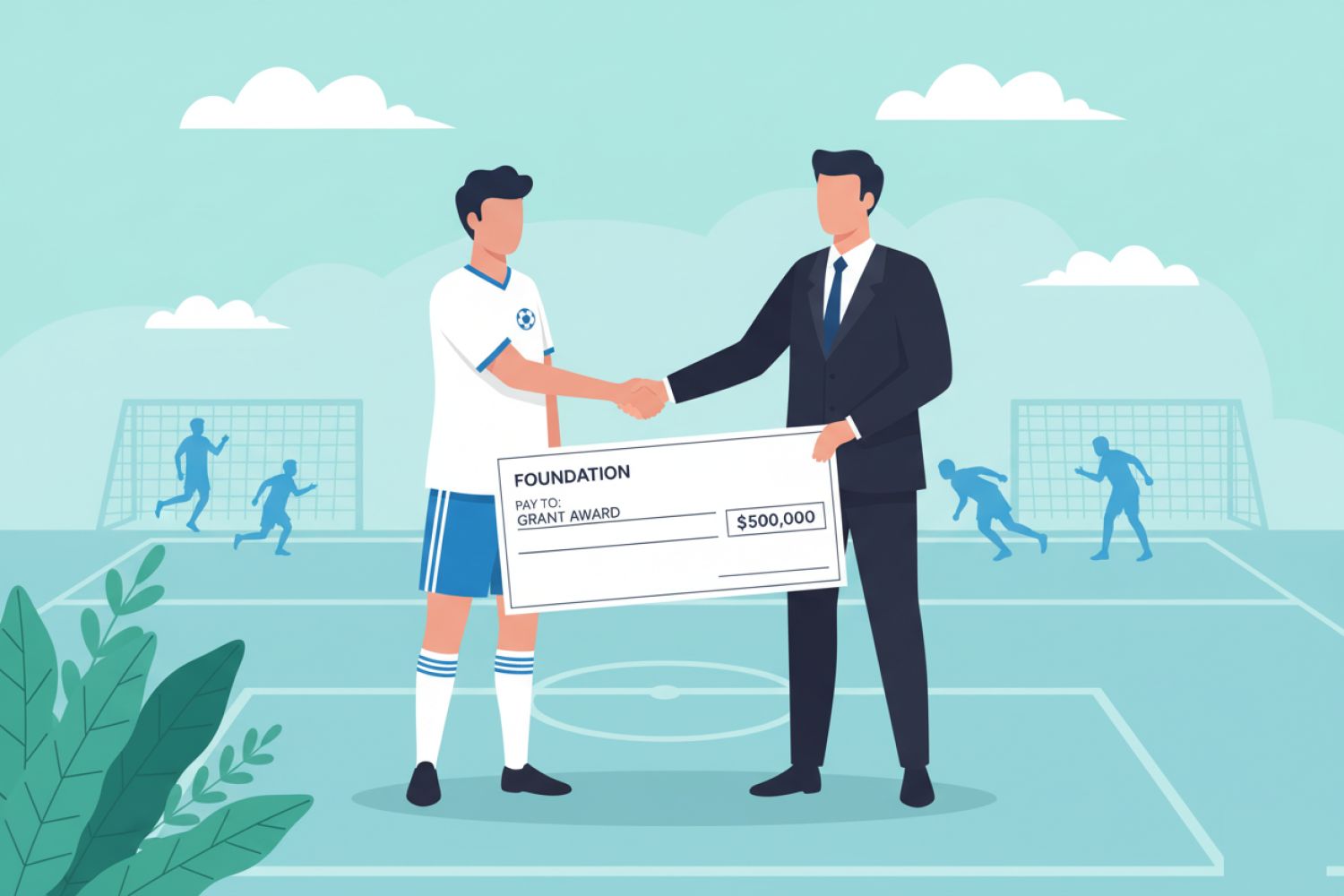
Grants provide an excellent avenue to find institutional partners whose mission aligns perfectly with yours. This is similar to a soccer club seeking a technical sponsor or a community-based organization finding a strategic partner to expand its programming. It's about finding a funding organization with the same core values and play style to form a powerful partnership. Grants can provide significant, project-specific funding, moving your tax-exempt organization from a grassroots effort to one with a broader, institutional base of support.
What are Grants and Foundations?
A foundation is a specific type of tax-exempt entity that provides funding to support a specific purpose. There are different types, including private foundations (funded by an individual or family), community foundations (public charities that focus on a specific geographic area), and corporate foundations (funded by a for-profit company). A grant is a monetary donation given by one of these foundations to another tax-exempt organization (like yours) to support a particular project or program. It is a strategic tool for securing significant, targeted support.
Grants are a part of the "Corporations & Foundations" room on the second floor of the Clubhouse of Development, signifying a step up from the mass-appeal annual giving on the first floor.
The Grant Writing Process
Grant writing is a process of research, preparation, and communication. It requires a clear, well-supported story that aligns with the foundation's goals. According to COGEO's methodology, the process can be broken down into four key stages:
This is the initial step. You need to find foundations that are a perfect match for your mission. You should never apply for a grant without first determining if the foundation's focus areas, geographic priorities, and giving history align with your needs. You can use tools like Foundation Center Online (often free at libraries) or Grant Station to help you identify potential funders.
Research & Prospecting
Connecting
After identifying potential partners, look at your current donor relationships to see if any of your supporters—whether they are major donors, board members, or influential community members—have a personal connection to the board or leadership of the foundation. You can find this information out on their website or look at their 990 tax forms. If not, a strategic outreach or phone call to the foundation to establish a relationship with a program officer, if welcomed, is a pivotal step before applying.
Preparation & Writing
This is where you leverage the work you've done in previous lessons. Your case statement provides the core language for your application, and your data (Lesson 2) provides the evidence of your impact. You must be able to clearly articulate the problem, your solution, your budget needs, and what specific outcomes will result from the funding. A compelling grant application should be concise, data-driven, and focused on the program's impact. You know you have done well with an application when the requested money is the final puzzle piece to make everything else work.
Stewardship
Just like with individual donors, stewardship after the grant is crucial for foundations. In fact, many grant recipients fall short on this step, making effective stewardship a key to a long-lasting funding relationship. Foundations are explicitly designed to grant money, and they are looking for fantastic partners to be on the other side of that relationship. This can lead to repeat funding and an enduring partnership if your stewardship process is strong.
Conclusion
Securing grants from foundations is a powerful way to accelerate your organization's growth. By approaching it as a strategic process of finding institutional partners with shared goals and building personal relationships with their leadership, you can unlock significant funding to expand your programs and increase your impact.