
Chapter 11: Bonus - Capital Projects
IN THIS LESSON
Capital Projects—Building for the Future
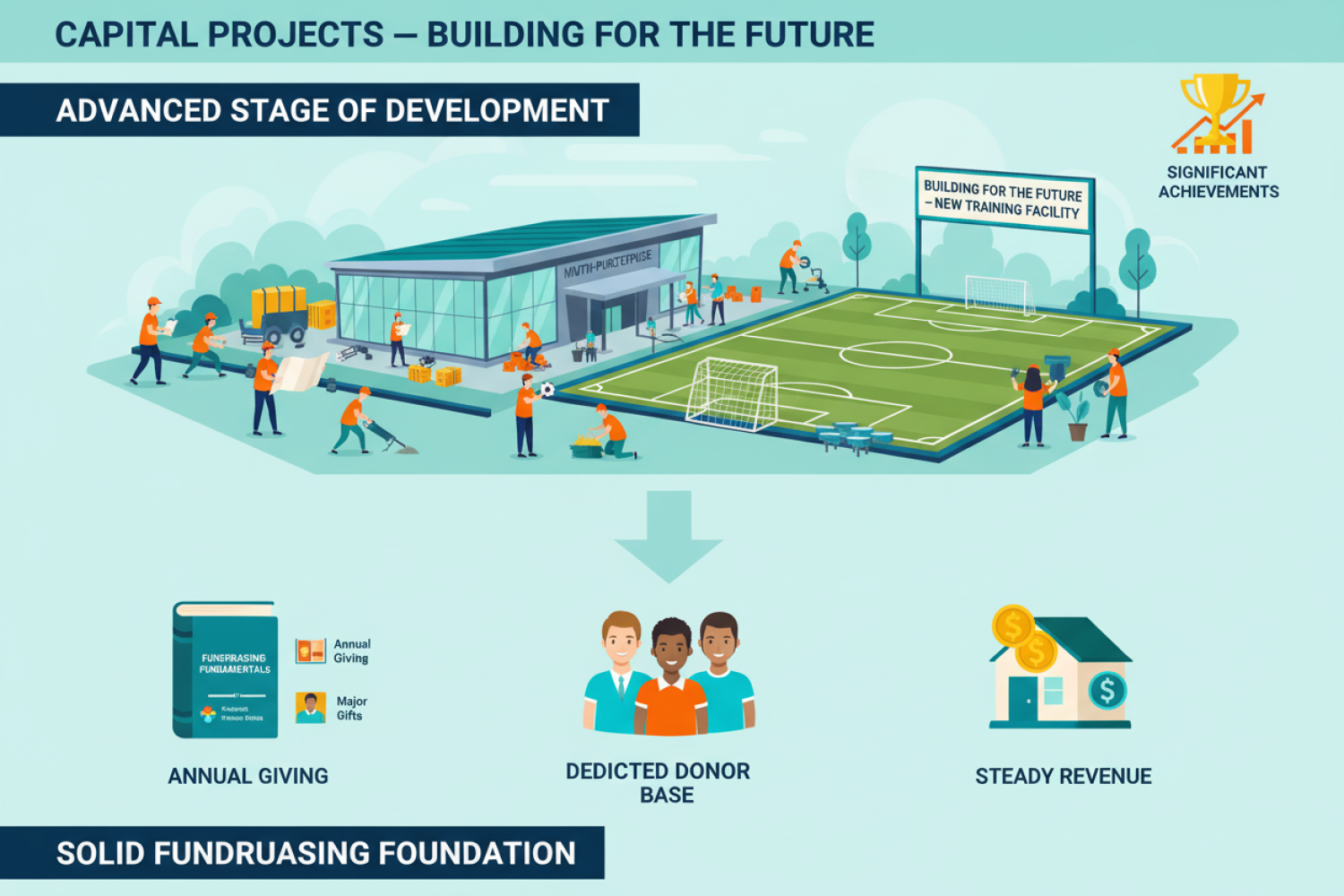
Now that you have a solid understanding of the fundraising fundamentals, let's explore an advanced stage of development: capital projects. A capital project is a fundraising effort to secure a major physical asset, such as a new field, a clubhouse, or a multi-purpose training facility. This is an advanced topic that is unlocked once an organization has built a solid fundraising foundation and has a dedicated donor base.
What is a Capital Project?
A capital project is a term created and used by COGEO to describe the three-step method required to actualize a physical asset through professional fundraising. This is a strategic, multi-step undertaking that is distinct from the day-to-day work of fundraising for your programs. The goal is to fund the creation of something physical that will create a lasting legacy and provide a foundation for your organization's mission for decades to come.
The Three Sequential Steps
A successful capital project is a carefully planned journey that follows three sequential steps. The most common and dangerous mistake a group can make is to assume this process only includes the final stage: the capital campaign. In fact, it would be better to not do one at all than to launch one and fail. The first two stages are preparation and evaluation activities designed to ensure the right project occurs at the right time for the right reasons. This comprehensive approach is what ultimately ensures success in the third phase.
A Needs Assessment: This is the strategic planning phase. Before you can ask for money, you must define the purpose for the capital project based on your organization's strategic priorities. You need to clearly articulate what is truly needed versus what is simply wanted and why it is essential for the future of your organization. This can be an informal brainstorming session or a formal outcome of a strategic plan.
A Feasibility Study: Once you've defined the need, a feasibility study should be conducted to test whether a capital campaign has a real chance of success. This study involves interviewing potential donors and stakeholders to ask them specific questions to gauge their interest and capacity to give. It is a crucial step that prevents an organization from launching a campaign that is likely to fail. The study's results will either recommend moving forward with a campaign with a recommended raise amount and timeline to accomplish the raise or outline the necessary steps to get your organization ready in the future.
A Capital Campaign: This is the fundraising phase. The campaign itself is a multi-year effort to raise the money for the project. These campaigns are long-term commitments, typically lasting 18-36 months. Capital campaigns are often done in phases, starting with a "quiet phase" to secure lead gifts before moving to a broader "public phase" for community support. Success in this phase is a direct result of the work done in the first two steps and requires a dedicated leadership team.
Required Tools for Success
Your work in previous lessons has laid the groundwork for a successful capital project. To undertake a campaign of this magnitude, you will need to demonstrate readiness with these specific resources:
Dedicated Leadership: An Executive Director who is prepared to lead the charge, a committed board of directors, and a strong campaign committee.
A Solid Donor Base: You need an annual fund that is raising a significant amount of money. A board that has a 100% giving commitment is also a prerequisite for success.
A Custom Campaign Case Statement: This outlines your vision for the project and why it is essential.
A Robust CRM and Prospect List: You need a strong donor management system to track all gifts and a custom prospect list of potential lead donors. Your list should also include potential corporate, foundation, government, and educational institution prospects.
Conclusion
A capital project is a huge step for a group to take on, but it is one that levels you up into Stage 6 and 7 territory. By doing one, you will actualize the dream resources to make your business side even more sustainable, controlling your own future and more sustainably delivering on your mission/programming. By following this sequential approach and building on the foundations you have already established, you can move from sustaining your mission to creating a lasting legacy for the future of youth soccer in your community.